WEnable Original — Disability Inclusive Sourcing
Coffee from Madagascar & the DR Congo

Enjoy the coffee. Follow what it helps build.

Coffee from Madagascar and the DRC. Our goal is printed on every pack: crafted at origin. That means local roasteries, producer co-ownership and meaningful participation for people with disabilities throughout the coffee chain.

Disability inclusive sourcing

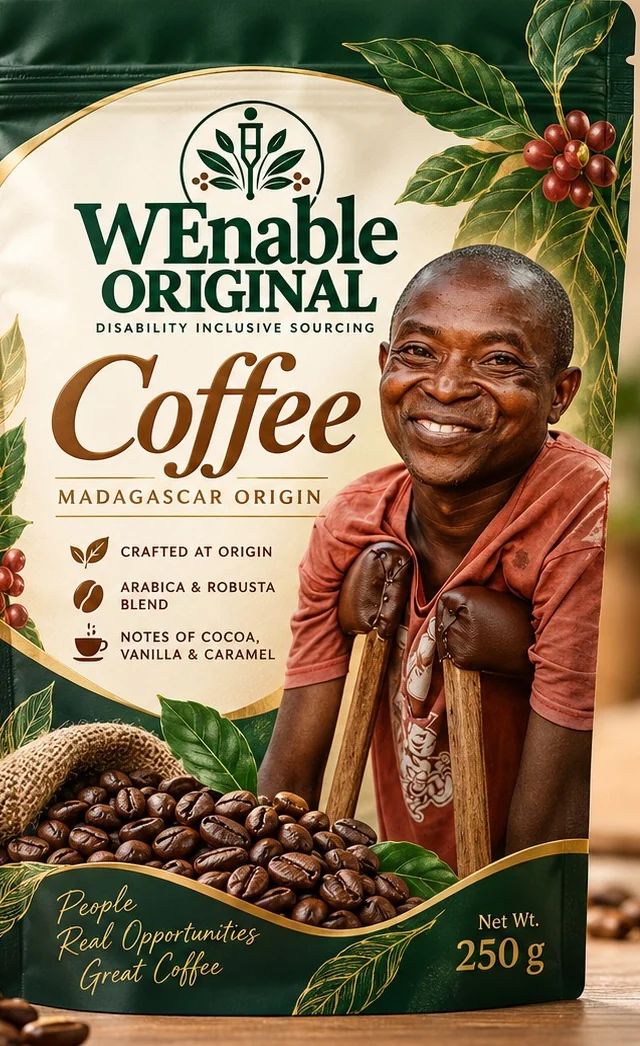
A 250 gram pouch of WEnable Original coffee from Madagascar, in deep green and cream, with a smiling man on the front.
Pascal Blaise smiling, leaning on his wooden crutches.
The coffee

Two origins. One very good reason to pour another cup.

Grown in Madagascar and the Democratic Republic of the Congo. Bought as coffee, enjoyed as coffee, and connected to a plan for the places it comes from.

A 250 gram pouch of WEnable Original coffee from Madagascar, in deep green and cream, with a smiling man on the front.
Madagascar origin

WEnable Original Coffee — Madagascar

  • Grown inMadagascar
  • Roasted inTo be confirmed before launch
  • Size250 g

Price at launchPrices and stock come straight from our shop.
Packaging in design
DR Congo
DR Congo origin

WEnable Original Coffee — DR Congo

  • Grown inDemocratic Republic of the Congo
  • Roasted inTo be confirmed before launch
  • SizeTo be confirmed before launch

Price at launchPrices and stock come straight from our shop.
Private preview. The shop is not connected yet, so nothing can be ordered and no prices are shown. Products, prices and checkout will come from Shopify.

From the branch to your cup — keep scrolling

From the branch to your cup

01

Picked ripe, by hand.

It begins on a branch in Madagascar. Only the cherries that have turned deep red are ready. The rest get more sun.

02

Gathered, sack by sack.

Cherry by cherry the sacks fill. Then the fruit is processed and dried until only the pale green bean is left. This is skilled work, and people with disabilities belong in it as producers and partners.

03

Roasted until green turns brown.

Heat does the magic: green, then gold, then a deep, glossy brown. Today this step still happens far from the farm. Crafted at origin is the goal: one roastery in each country.

04

Ground just before brewing.

The moment the beans break, the room changes. That smell is the whole journey arriving at once.

05

Dosed, tamped, pulled.

Fresh grounds into the filter basket, one firm press with the tamper, and the basket locks into the bottomless portafilter. Then the shot starts to run: slow, dark and creamy.

06

Poured with heart.

Your cup, their field. Enjoy the coffee and follow what it helps build.

Shop coffee
Our approach

More value where the coffee grows.

Most coffee from Africa leaves the continent before its real value is created. Roasting is where much of that value is added. We want more of it to happen, and stay, in the countries where the coffee grows. We call that goal crafted at origin.

What your coffee helps build

  1. Current sourcing

    You buy coffee

    Grown in Madagascar or the DR Congo. You pay for a good bag of coffee. That is the whole transaction.

  2. Proposed funding model

    A defined contribution

    We intend to set aside a defined amount from each coffee sale for the processing plan. The exact amount and its basis will be published here before it starts.

  3. Planned infrastructure

    Two roasteries

    The first milestones are one roasting unit in Madagascar and one in the DR Congo. Both are plans today, not buildings.

  4. Our objectives

    What we are aiming for

    • More processing value at origin
    • Producers who co-own the processing
    • Real work for people with disabilities
Today

Where we are

  • The coffee is grown in Madagascar and the DR Congo.
  • Roasting takes place elsewhere.
  • You buy coffee. Nothing more is asked of you.
The goal

Crafted at origin

  • Local roasting units in both countries.
  • An investment and ownership pathway for producers.
  • Inclusion built into every operating partnership.
How producers are meant to become co-owners

Producers are paid for their coffee. Separately from that payment, the proposed model includes an earmarked investment premium. It is reserved for processing infrastructure. It is not extra household cash.

Over time, these reserved premiums are intended to become the producers’ or cooperatives’ investment, and their equity, in the venture that owns the processing infrastructure. That stake concerns the roasteries, not the WEnable brand or its retail business.

These arrangements are proposals. They still have to be agreed with participating producers and cooperatives, and ownership remains planned until it is legally established. How the contribution from each sale and this premium relate to each other will be confirmed and explained here.

For customers: you are buying coffee. Buying coffee does not give you shares, bonds, interest or investment returns.

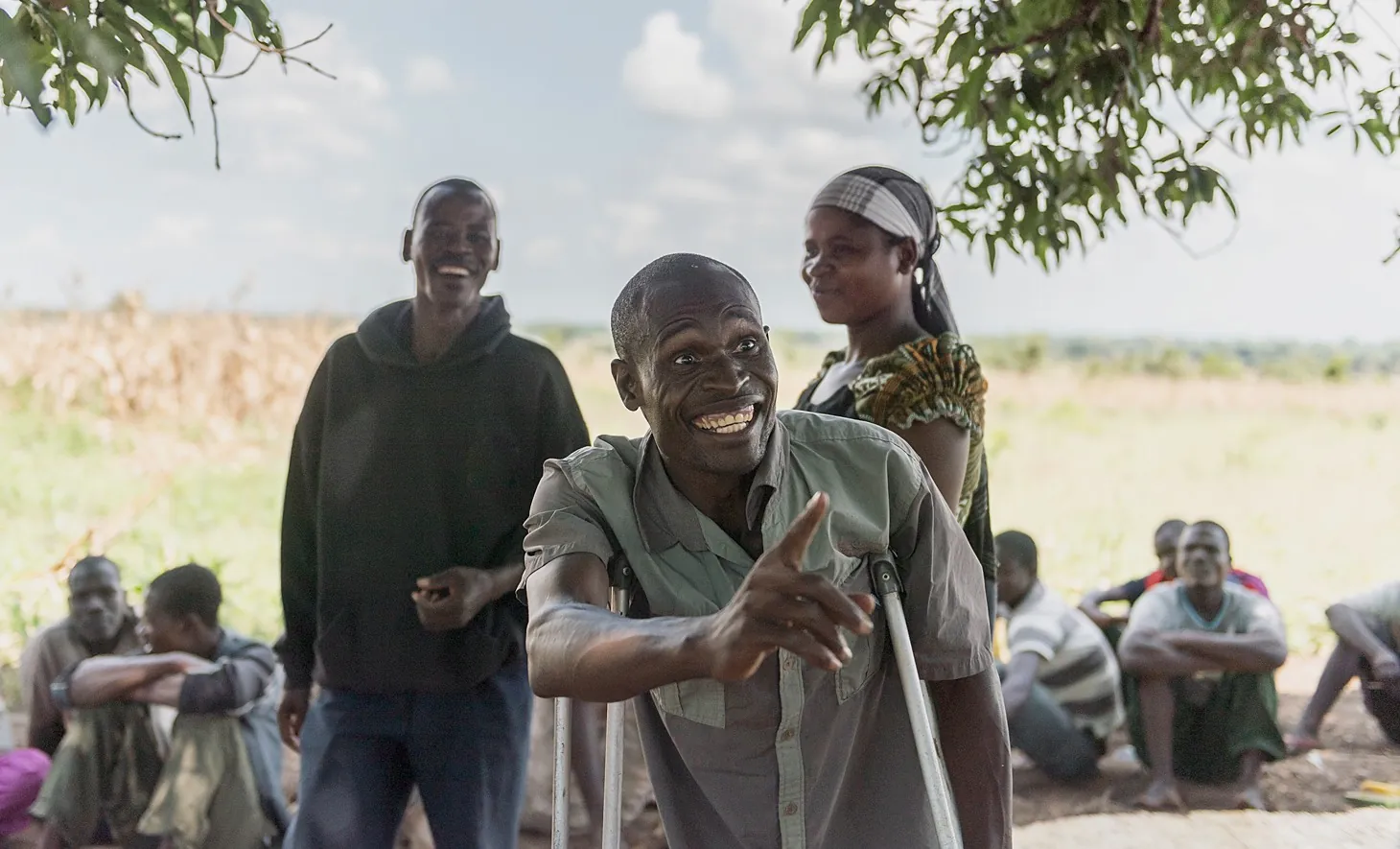
A man leaning on forearm crutches speaks to a group outdoors, smiling widely and pointing ahead while others listen and laugh.
We do not sell pity. We sell quality coffee with a stronger value chain behind it.

We build towards supply chains where farmers with disabilities take part as producers, partners and entrepreneurs. Not as charity cases.

People and participation

Inclusion in every part of the chain.

Not one job at the edge of the business. Every link of it. We are working towards meaningful roles for people with disabilities from the hillside to the boardroom.

  • Growing
  • Collecting
  • Processing
  • Quality control
  • Packaging
  • Logistics
  • Sales
  • Management
  • Ownership
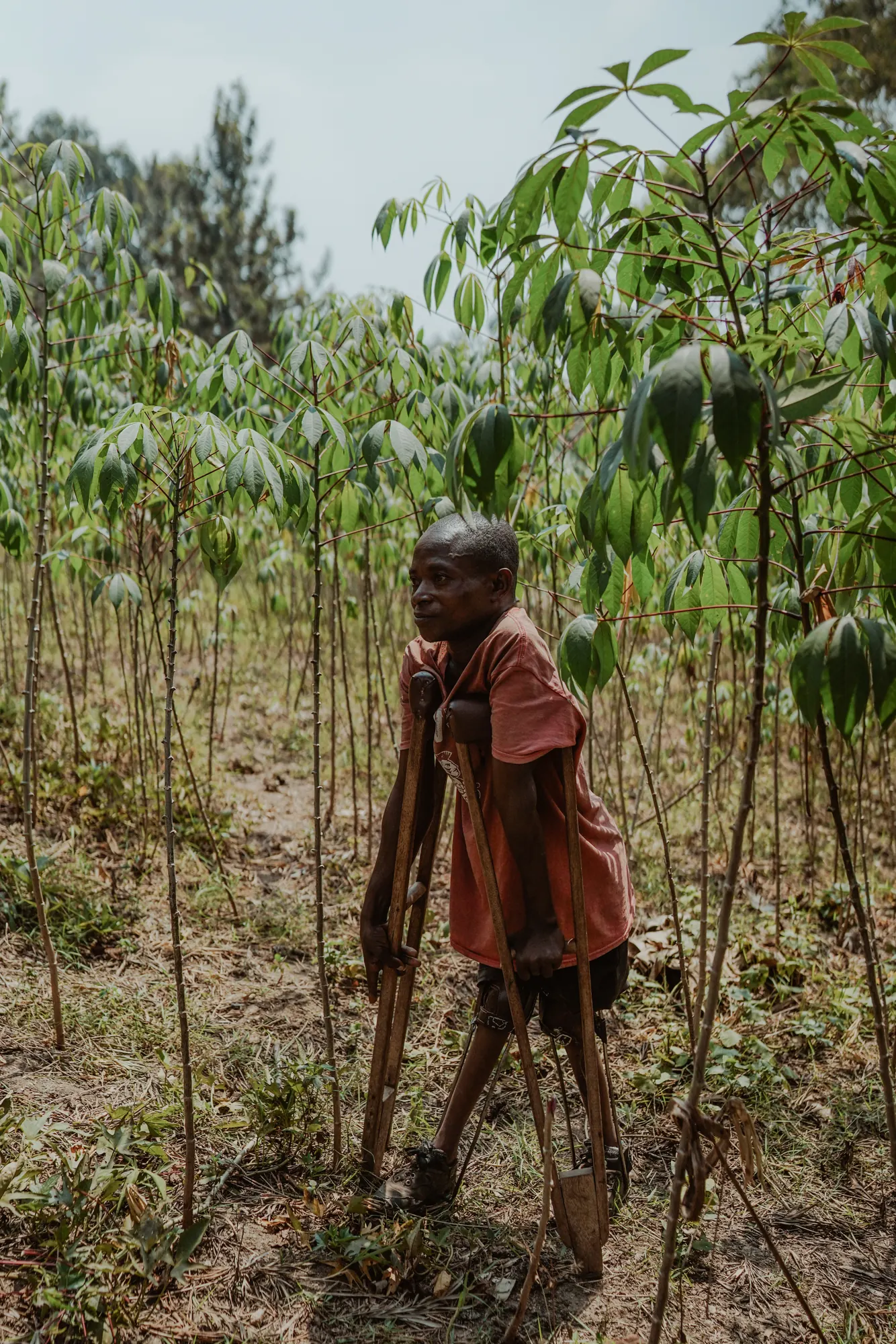
Pascal Blaise walks through a field of young plants on two wooden crutches, carrying a spade.
Pascal BlaiseIn the field, spade in hand.
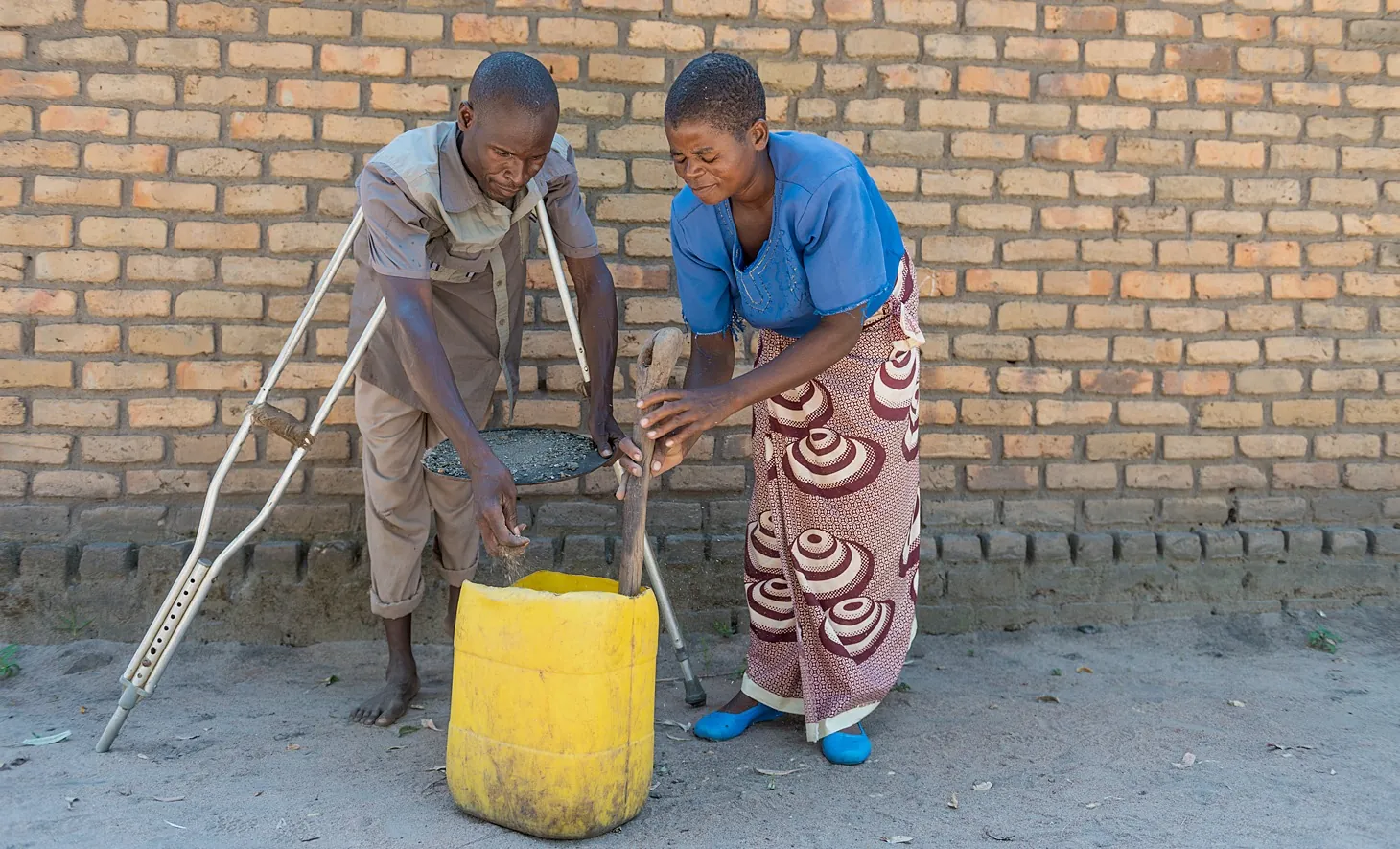
A man with crutches and a woman work together, sieving and pounding into a yellow container in front of a brick wall.
Shared work, shared skill.
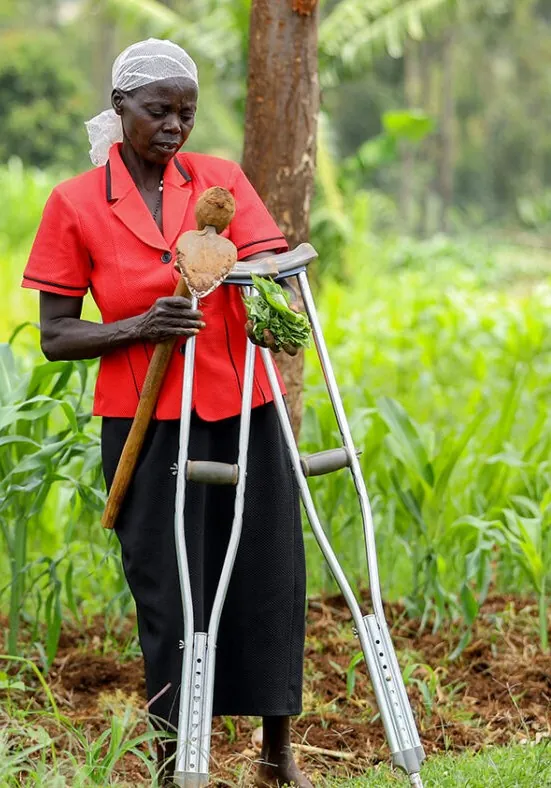
A woman in a red blouse stands in a green field, steadied by her crutches, holding a hoe and freshly picked leaves.
A farmer at work.
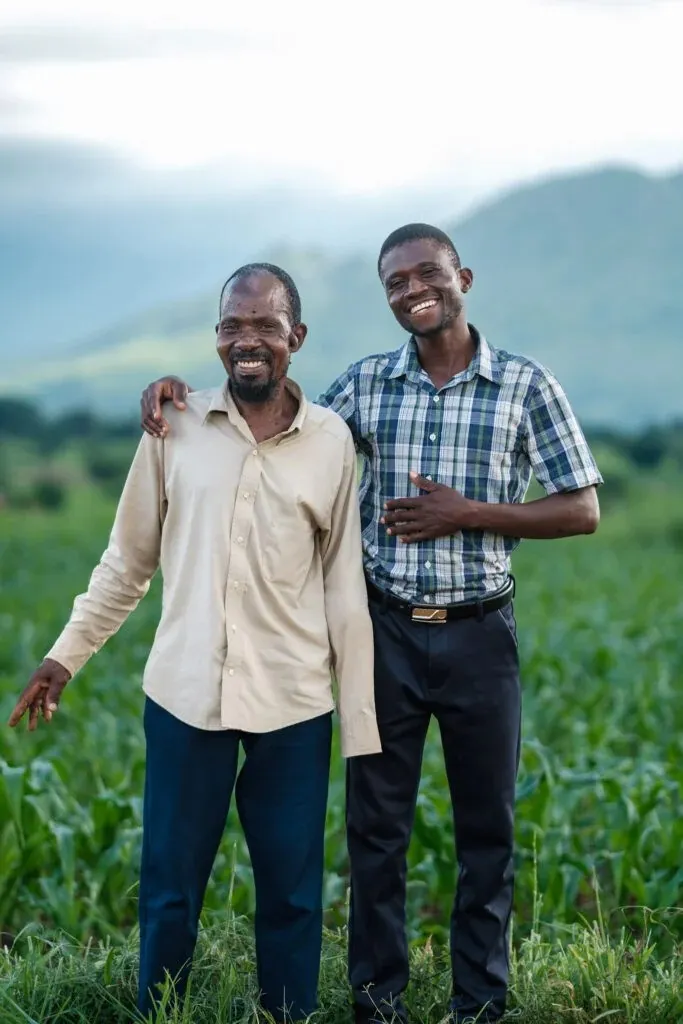
Two men stand laughing in a green field with hills behind them, one with his arm around the other’s shoulder.
Shoulder to shoulder.
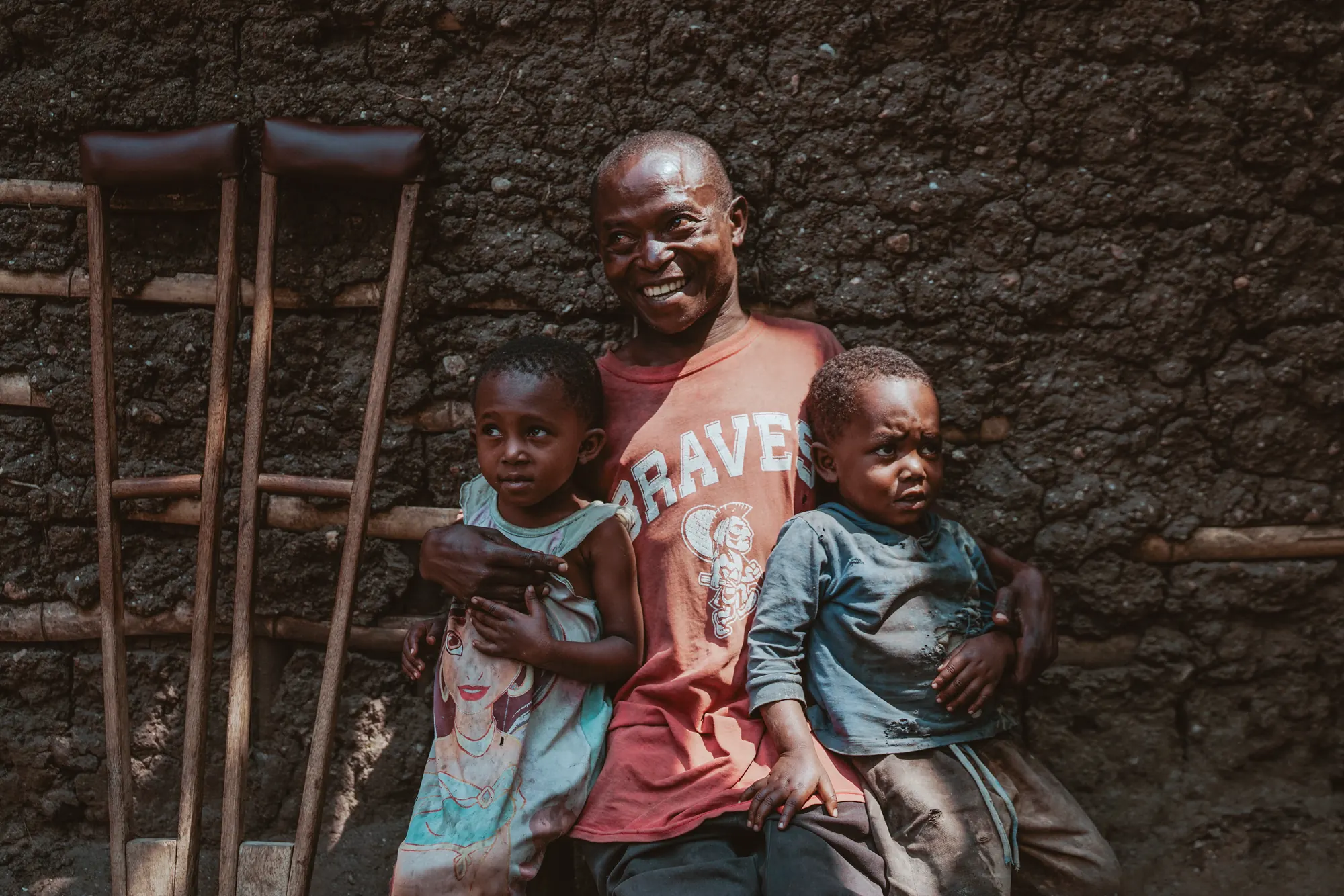
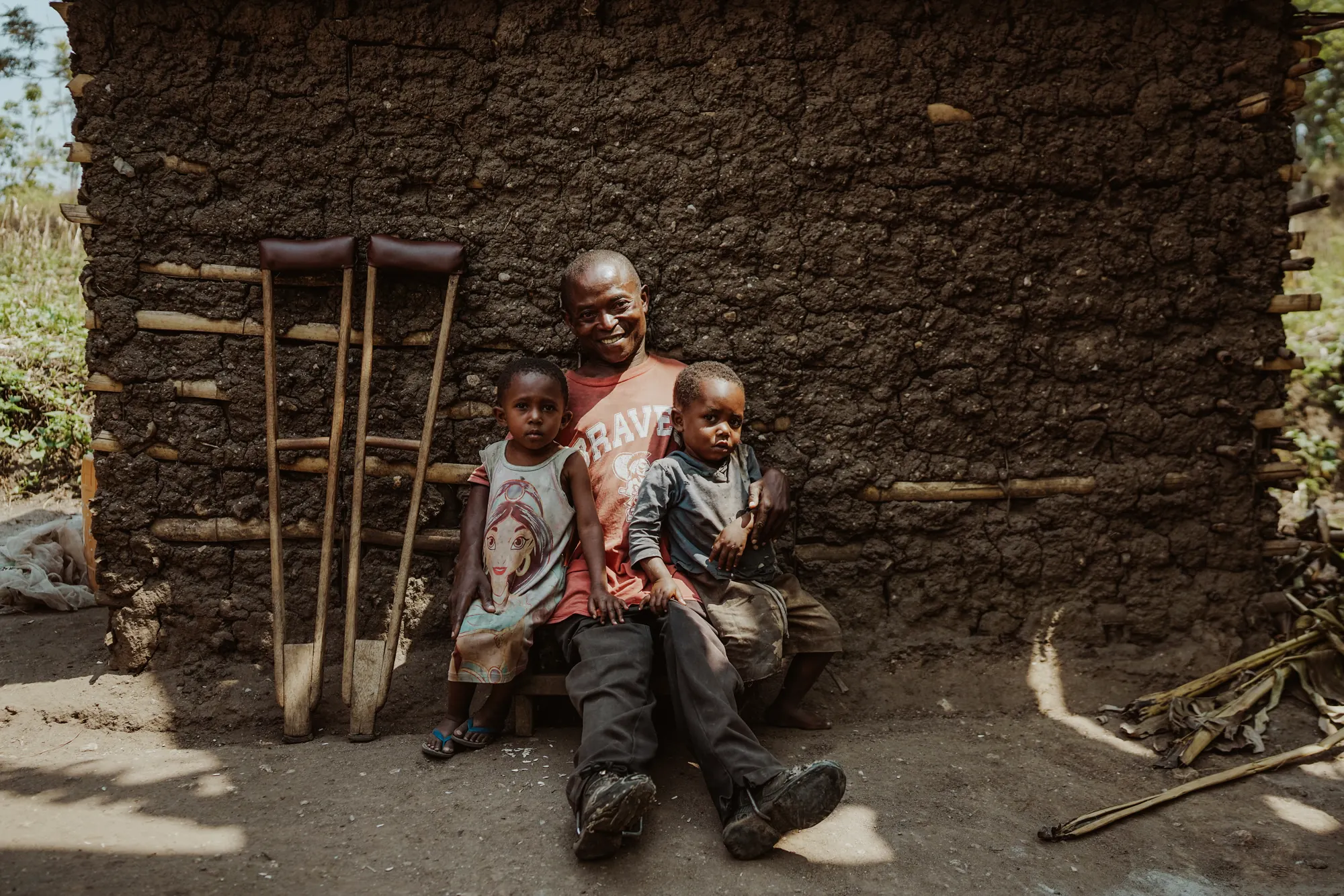
Pascal Blaise sits against a dark earth wall holding two small children, his crutches leaning beside him.
Pascal BlaiseA quiet moment.
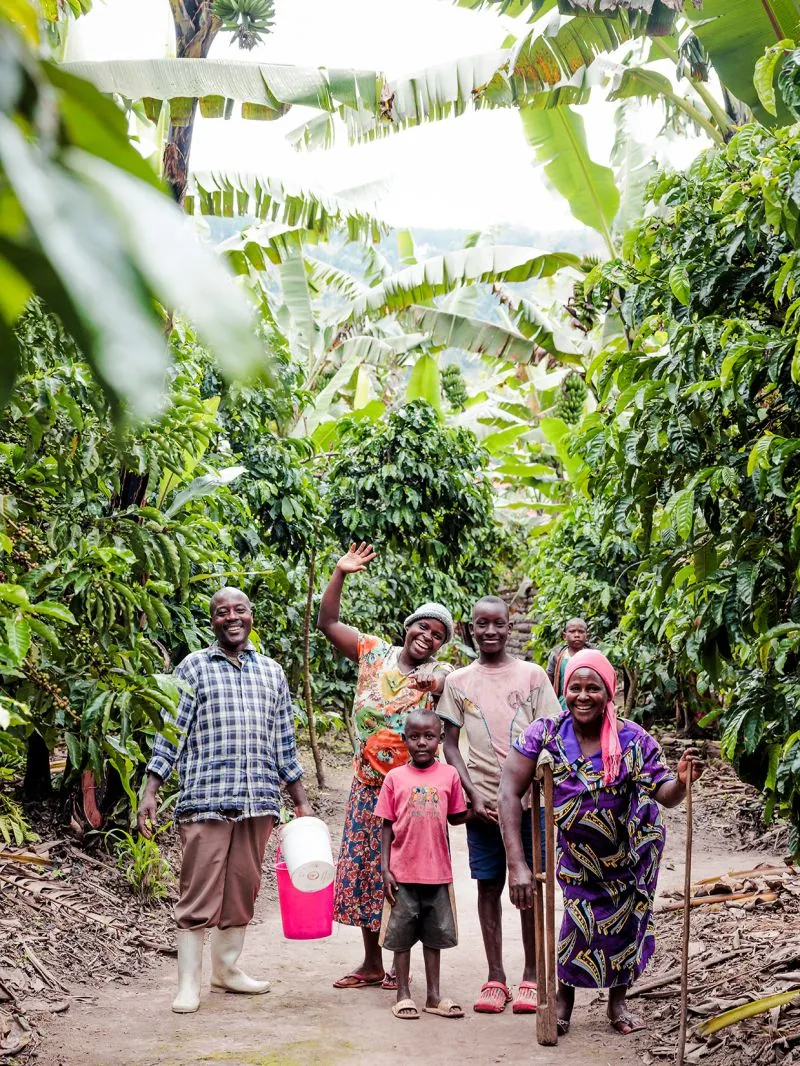
A family stands on a path between coffee trees and banana plants, waving and smiling; one woman leans on a walking stick.
Among the coffee trees.
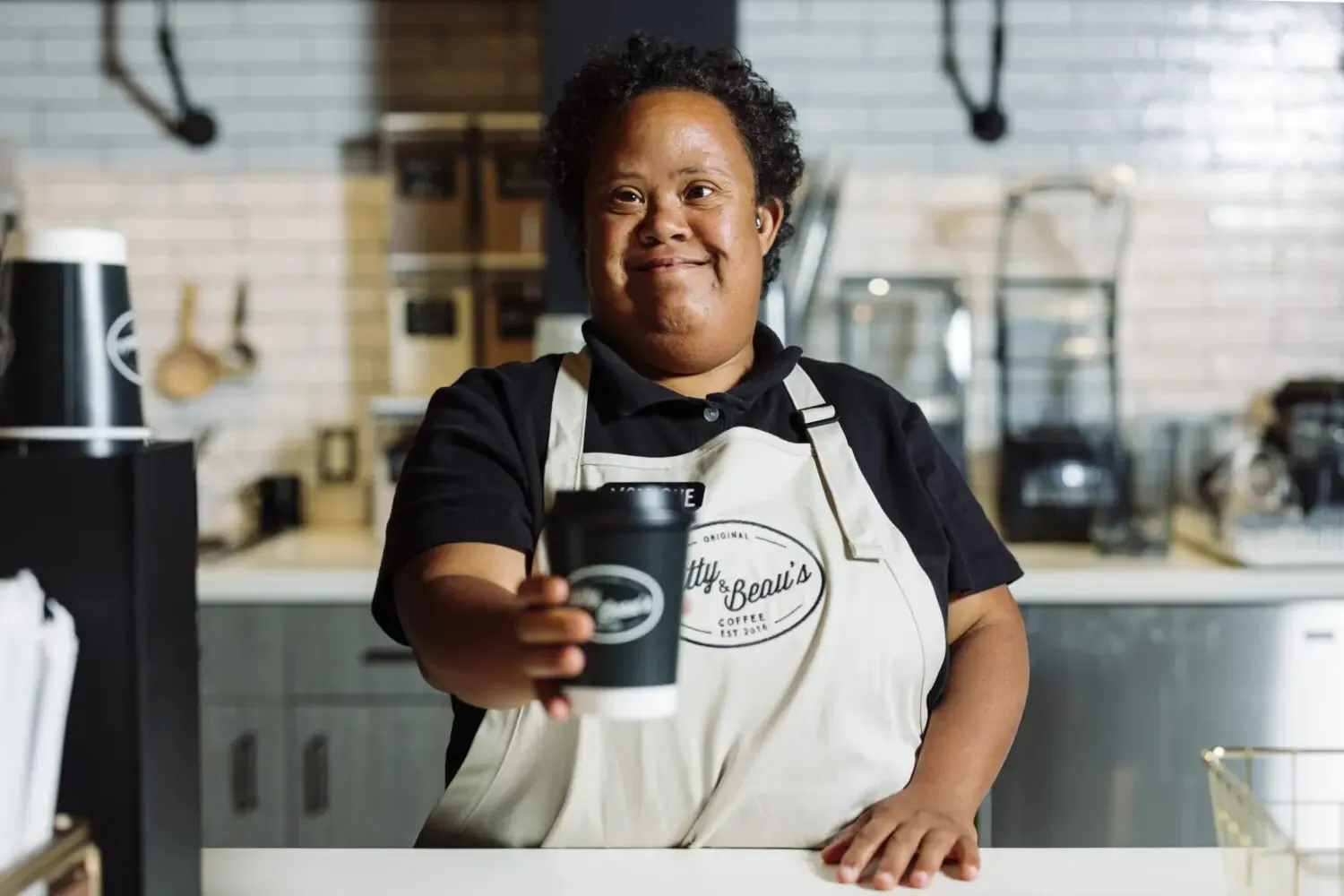
A barista with Down syndrome, wearing a cream apron, smiles and holds out a cup of coffee across the counter.
All the way to the counter. Illustrative.
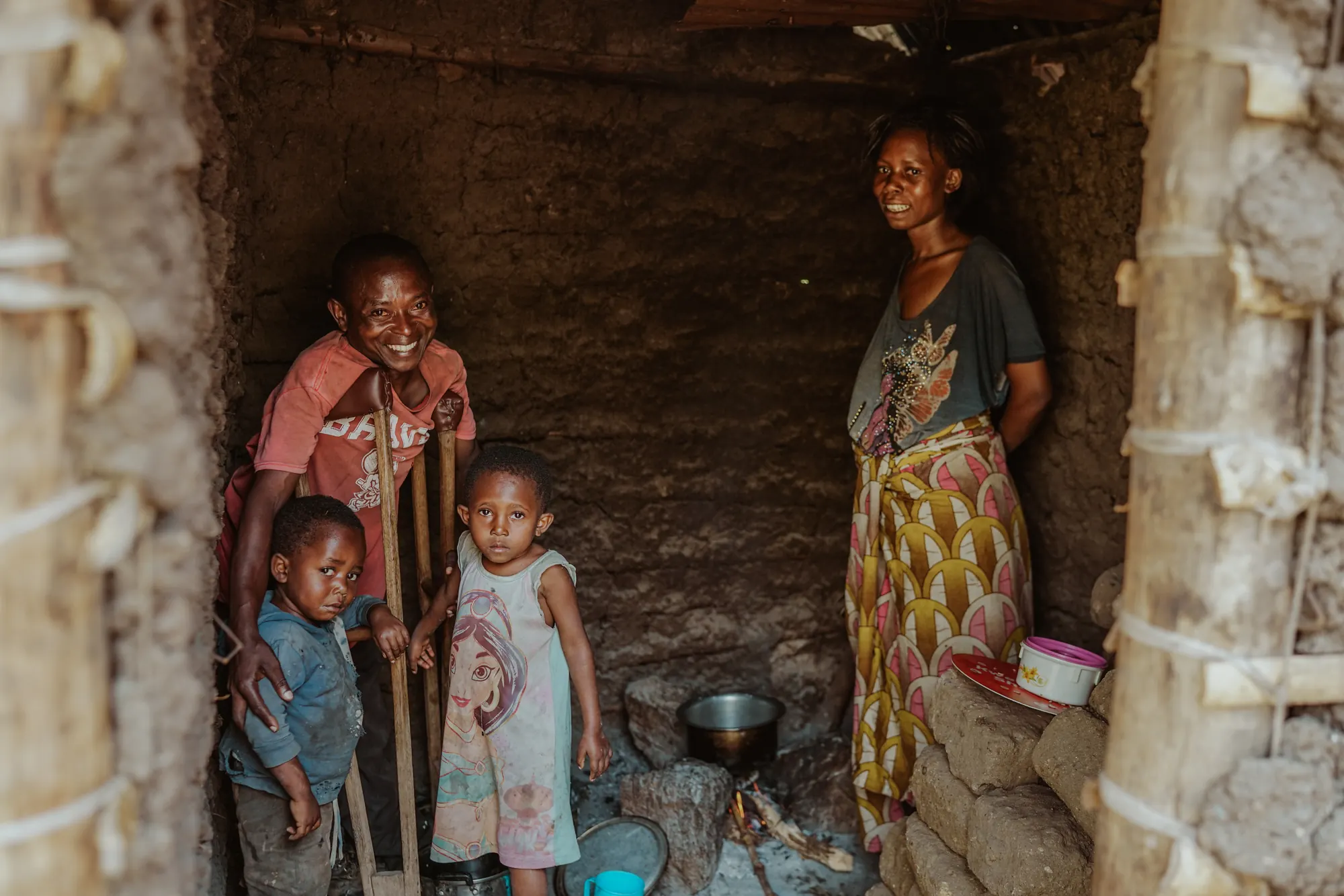
Pascal Blaise with two children beside a cooking fire, while a woman stands in the doorway.
Pascal BlaiseBy the cooking fire.
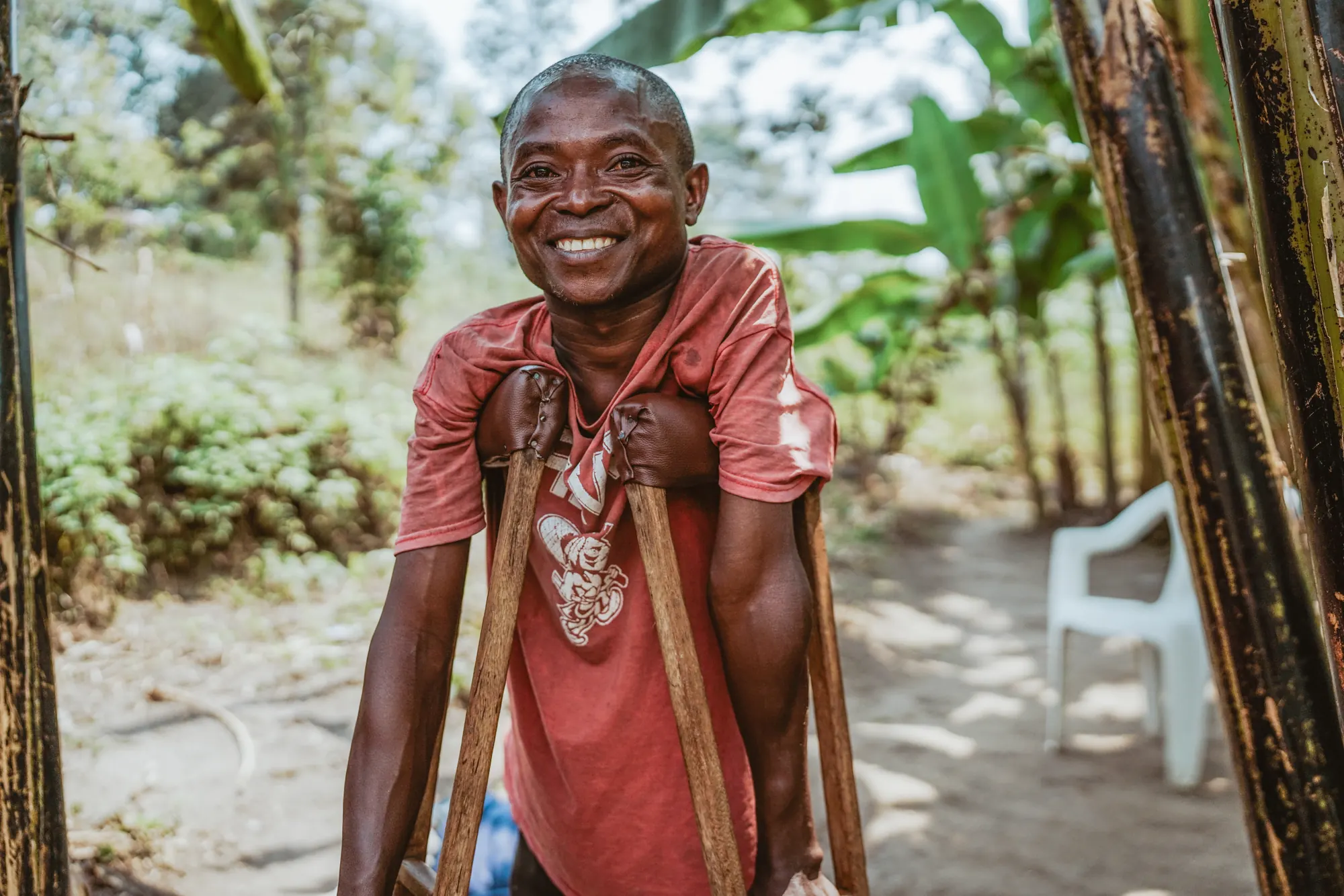
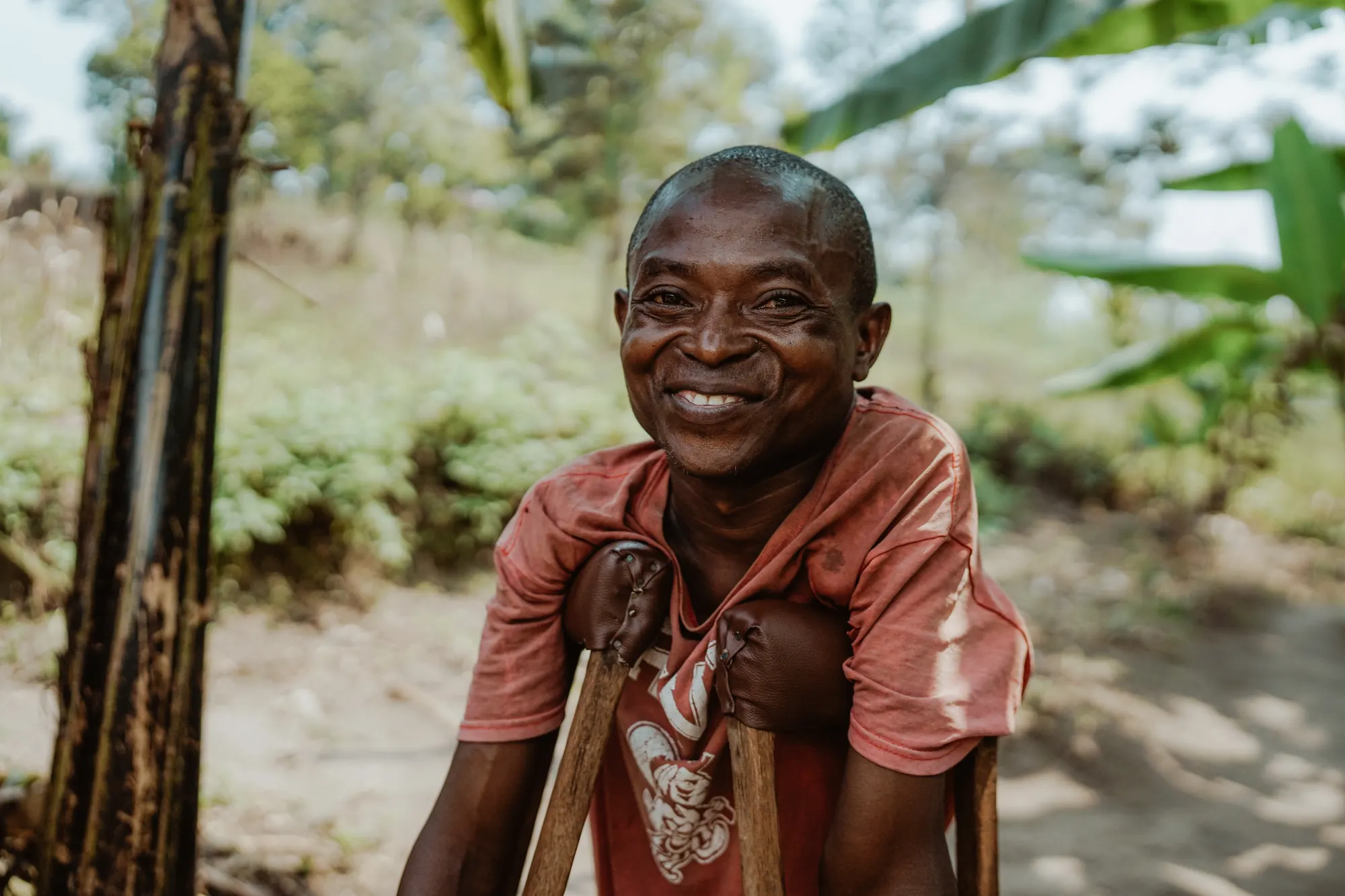
Portrait of Pascal Blaise smiling, resting his arms on the padded tops of his wooden crutches.
The face on our pouch.

One photograph does not prove inclusion. The roles do. In our approach we look at accessible workstations, suitable training, fair selection, meaningful roles and a real say in decisions. These are proposed measures, to be agreed with participating producers and cooperatives.

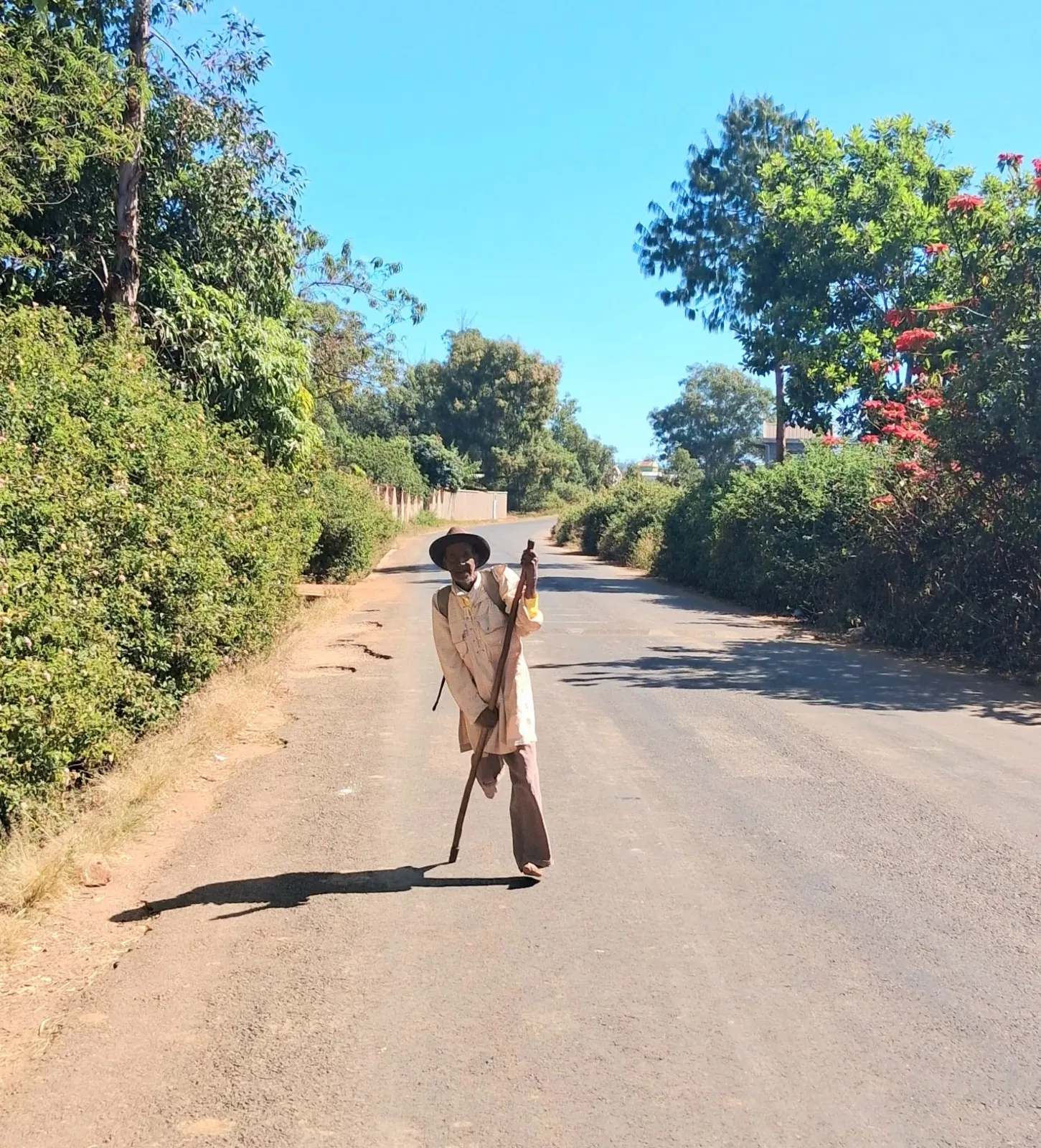
A man in a hat walks alone down a sunlit road in Madagascar, leaning on a long wooden crutch.
About Us

It is all about him.

“Three times in two years I had the privilege of looking deeply into his eyes.”

Read “The Field Beyond Moab”
Our origins

Crafted at origin: two planned roasteries.

When coffee is roasted where it grows, more of the work, the skills and the income stay there too. That is the reason for both projects below. Neither exists yet, and we will only report progress we can document.

Planned

Madagascar

Purpose
A roasting unit for coffee grown in Madagascar, run with producers and with people with disabilities in skilled roles.
Current stage
Planning. No site, equipment or opening date has been confirmed.
Next milestone
To be announced.
Updates
No updates published yet.
Planned

Democratic Republic of the Congo

Purpose
A roasting unit for coffee grown in the DR Congo, run with producers and with people with disabilities in skilled roles.
Current stage
Planning. No site, equipment or opening date has been confirmed.
Next milestone
To be announced.
Updates
No updates published yet.
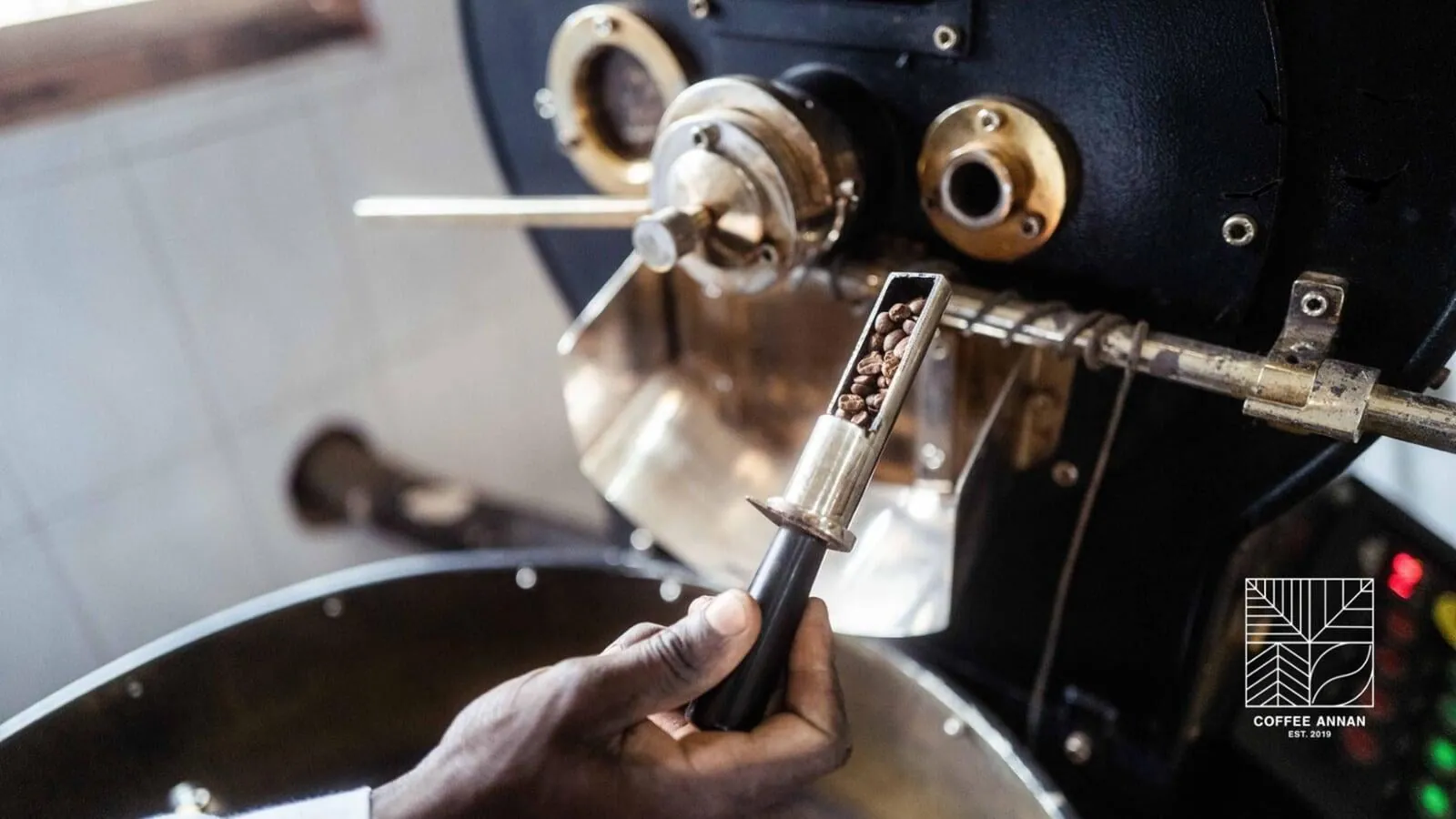
A roaster’s hand pulls a sample scoop of brown coffee beans from a drum roaster to check the roast.
Checking the roast, one scoop at a time. Illustrative.
In short

The short version.

We sell coffee from Madagascar and the DR Congo. Today it is roasted elsewhere. Our goal is crafted at origin: two local roasteries, with producers as co-owners and people with disabilities at work in every part of the chain. Buy a bag, bring the coffee to your organisation, or talk to us about investing in the roasteries.

Introduction filmOur introduction video is coming soon.
A family stands on a path between coffee trees and banana plants, waving and smiling; one woman leans on a walking stick.
Agroecology

Good coffee needs a healthy farm.

Shade, living soil and mixed planting keep a coffee farm productive for the next generation. We intend to offer participating producers and cooperatives support for farming this way.

This is an intention, not a certificate. We will name specific practices, partners and results here once they are confirmed.

Honest answers

Questions people ask us.

Where does the coffee grow?

In Madagascar and in the Democratic Republic of the Congo.

Where is it roasted today?

Not yet in the country where it grows. The roasting location is shown on each product page. “Crafted at origin”, the words on our pack, is the goal we are working towards.

What does a sale contribute?

We intend to set aside a defined amount from each coffee sale for the two planned roasteries. The amount, how it is calculated and when it starts will be published here before the contribution begins.

What is planned in each country?

One roasting unit in Madagascar and one in the DR Congo. Both are plans. We have not confirmed sites, equipment or opening dates.

How is producer investment meant to work?

The proposed model reserves an investment premium for processing infrastructure. Over time it is intended to become producers’ or cooperatives’ equity in the venture that owns the roasteries. It still has to be agreed with them, and it is not ownership of the WEnable brand.

What does participation in the value chain mean?

That people with disabilities have real roles in growing, collecting, processing, quality control, packaging, logistics, sales, management and ownership, with a say in decisions.

Am I investing when I buy coffee?

No. You are buying coffee. A purchase does not give you shares, bonds, interest or returns.

I invest for impact. How can I get involved?

Write to us at management@wenable.net. We will share the plan for the two roasteries, where it stands today and what is still open. Investment terms are discussed directly and are not published here.

For organisations

Coffee for your community.

Churches, NGOs, offices and teams drink a lot of coffee. Tell us how many people you serve and how often, and we will work out with you what is possible.

We answer every enquiry personally. We will be straightforward about what we can supply.

Preview: this form opens your own email app with your enquiry ready to send. Nothing is sent until you press send there.

WEnable Original — Disability Inclusive Sourcing

Our purpose

WEnable Original is built on Business as Mission principles. Our Christian faith shapes our commitment to dignity, participation and opportunity. We aim to build a profitable business that puts impact first.

Read the story behind it

WEnclusion is our wider work on disability inclusion in value chains. More information will follow here.

Next from the same fields: Chocolate · Vanilla In development

Your cart

The shop opens soon. This preview is not connected to Shopify yet, so there is nothing to order and nothing has been added. When the shop is live, checkout will take place securely with Shopify.

Email us about the coffee
Private preview